How it works
Three things worth understanding before you book: how the service is set up, what actually happens when a drain is cleared, and what relining is if the camera finds damage.
Skip ahead: what's wrong with yours?
Before reading three processes, find out which one you actually need. Send a photo or describe it and you'll get the likely cause, the fixed price and whether it's a job for us at all.
How Block Drains works
We're a marketplace for plumbers and drainers, not a plumbing company. We connect you with a licensed, insured drain plumber who covers your suburb, at one fixed price per job. We take the booking and handle the payment; the plumber does the work, is responsible for it, and is paid per job through us, so there's no incentive to pad the bill and nothing to negotiate at the door.
- 1
Tell us what's wrong
Pick the symptoms (toilet overflowing, sink slow, sewage outside) and your postcode. The site works out the right service and shows the fixed price before you give us a single detail.
- 2
Pick a two-hour window
Choose 'as soon as possible' or a window from 7am to 10pm, seven days. Availability is live: it's based on the plumbers who actually cover your suburb.
- 3
We assign a licensed local plumber
The job goes to the nearest available NSW-licensed drain plumber in our network. You get their name, licence number and ETA by text and email, plus a link to reschedule or cancel.
- 4
The job's done and reported
They clear the drain, put a camera through the line, flow-test everything and leave a short written report. Anything beyond the fixed price is quoted in writing first.
- 5
Your card is charged only when it's done
You save a card when you book; nothing is charged until the plumber marks the job complete. Any extra work is quoted in writing and only charged if you approve it online. Block Drains handles the payment and pays the plumber, so there's never a bill to settle at the door.
- 6
Come back for less
10% off every future job, $50 credit for every friend you refer, a discounted annual Drain Care clean, and a free return from the same plumber within 30 days if the drain re-blocks with no damage found.
Who's in the network
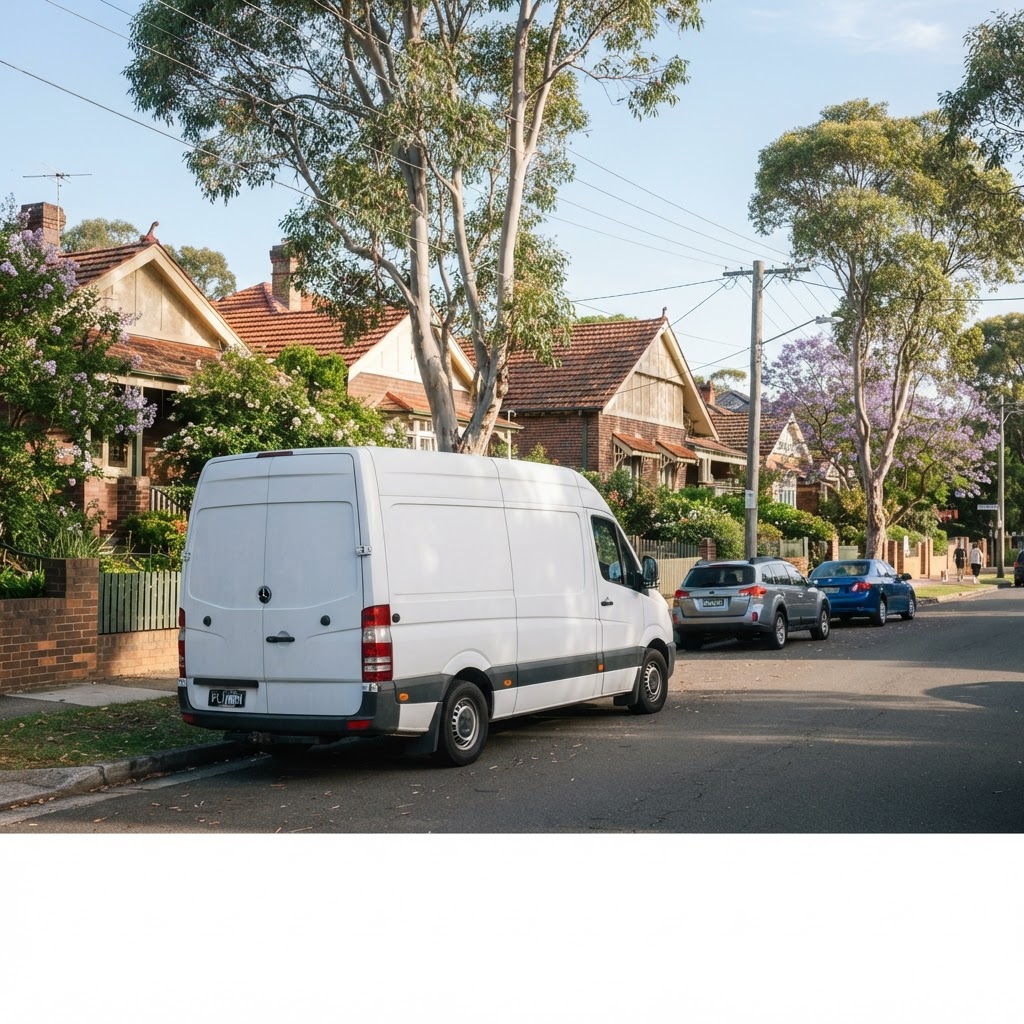
Independent plumbers with a current NSW plumbing and drainage licence, public liability insurance, a jetter and a camera on the van, and a track record on drains. We check the licence with Fair Trading, collect a review after every job, and remove anyone who misses windows or gets poor feedback.
Your job's plumber is named on your confirmation, licence number included, so you can check them yourself.
How a blocked drain is cleared
Clearing the blockage is only half the job. Every drain clear includes a camera inspection, because a drain that blocks once will block again unless you know why. This is what happens on a standard visit.
- 1
Find the access point
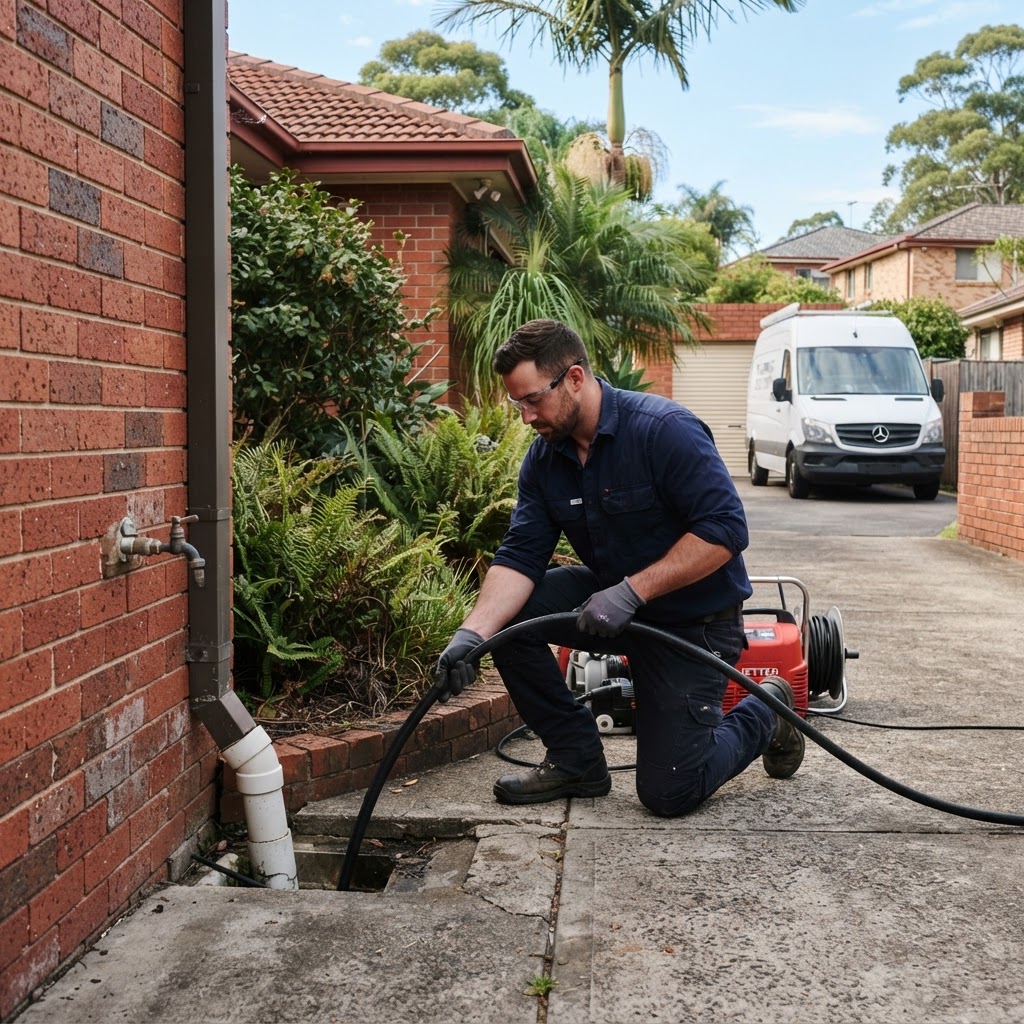
Usually the overflow relief gully (the grated outlet near an outside wall) or an inspection opening. This avoids pulling fixtures apart inside the house.
- 2
Work out where the blockage is
Which fixtures are affected tells the plumber whether it's a single branch (sink, shower) or the main sewer line (everything backing up).
- 3
Clear it with the right tool
A hand or powered auger for fixture traps and toilets. A high-pressure water jetter for the main line: it cuts through tree roots and scours grease and silt off the pipe wall instead of punching a hole through it.
- 4
Camera the line
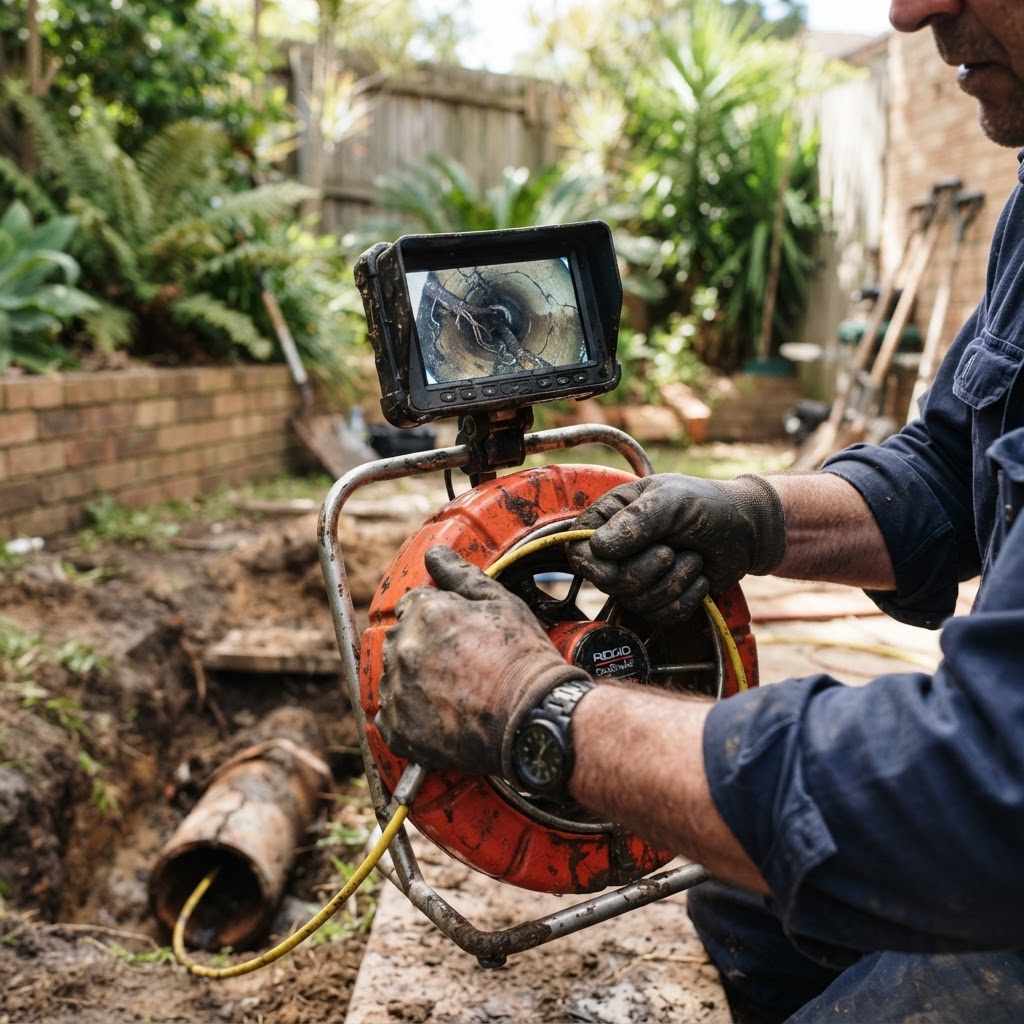
A CCTV camera goes through the cleared pipe. It shows what caused the blockage and whether the pipe itself is sound: roots at joints, cracks, a collapsed section, or a belly holding water.
- 5
Flow-test and report
Every affected fixture is run to confirm flow. You get a short written report with stills from the camera and, if there's damage, a fixed quote to repair or reline.
Auger / drain machine
A rotating cable that breaks up or pulls out the obstruction. Right for toilets, sinks and showers. Punches through roots but doesn't remove them.
Hydro jetter
Water at around 4,000 PSI through a nozzle that pulls itself along the pipe. Cuts roots, strips grease and flushes silt. The standard for main lines and stormwater.
CCTV camera + sonde
Shows the inside of the pipe on a monitor. The sonde lets the plumber mark the exact spot and depth of any defect on the surface, so a repair is a small hole, not a trench.
How pipe relining works
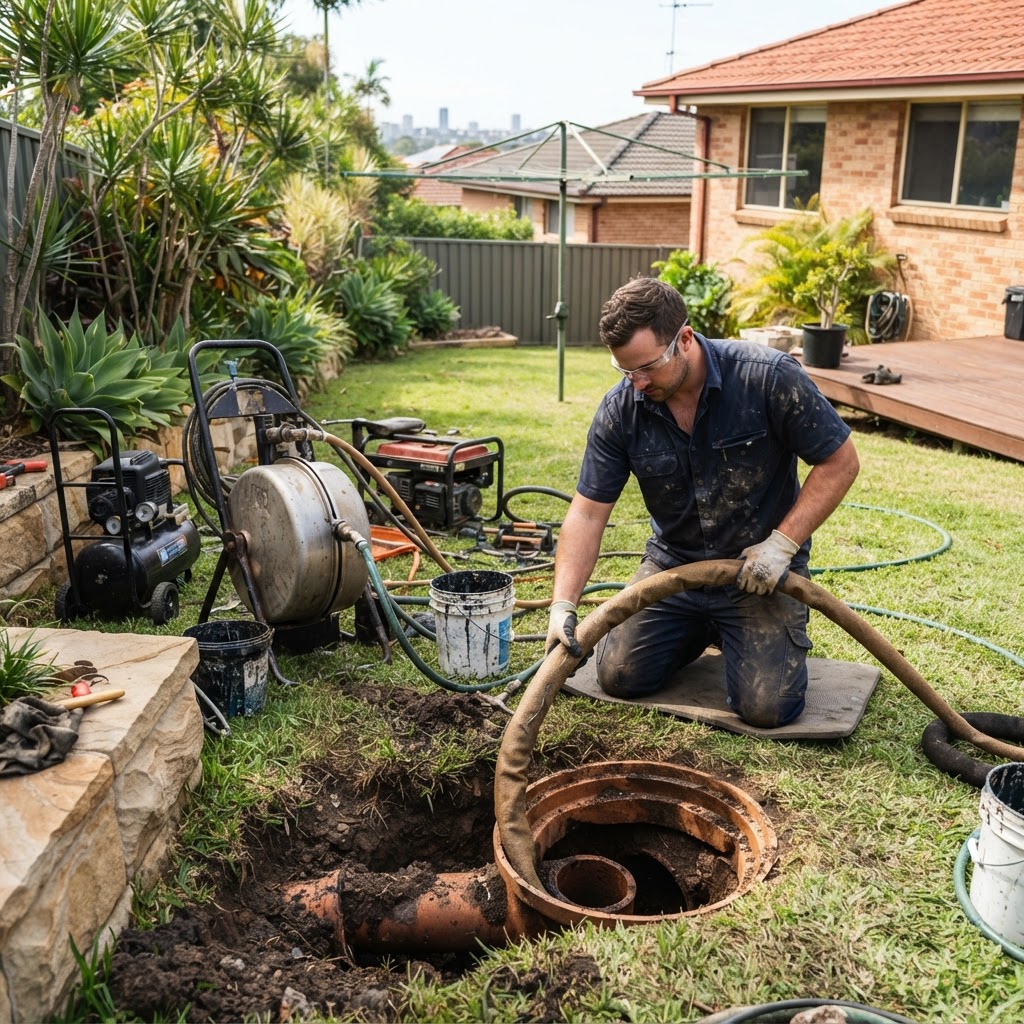
Relining repairs a cracked, root-damaged or offset pipe from the inside, without digging it up. It's the usual answer in Sydney's older suburbs where the sewer runs under a driveway, paving or an established garden.
- 1
Camera survey
The damaged section is measured and located with the CCTV camera and a sonde. This tells us pipe diameter, length, number of junctions and whether the pipe can be relined.
- 2
Clean the host pipe
The line is jetted and, where roots have grown through joints, cut back with a robotic cutter so the liner bonds to a clean wall.
- 3
Insert the liner
A felt or fibreglass liner soaked in epoxy resin is pulled or inverted into the pipe from the access point. No trench: it goes in through the existing opening.
- 4
Inflate and cure
A bladder inflates the liner against the pipe wall and it's cured with hot water, steam or UV light in a few hours. The result is a seamless new structural pipe inside the old one.
- 5
Reinstate and check
Junctions to other branches are re-opened with a robotic cutter, then a final camera pass records the finished pipe. You get the footage and a warranty certificate, typically 35 to 50 years.
| Reline | Dig & replace | |
|---|---|---|
| Time | Usually 1 day | 2–5 days plus reinstatement |
| Disruption | One access hole or none | Trench through whatever's on top |
| Typical cost | $3,000–$12,000 | $10,000–$30,000+ |
| Warranty | 35–50 years | New pipe, standard |
| Not suitable when | Pipe is fully collapsed or badly out of line | Access is impossible or too costly |
How it's priced: a setup cost of around $2,500, plus $450–$550 per metre of liner depending on pipe diameter, plus $650–$750 for each junction that has to be re-opened. We start with a $249 camera diagnostic, then give you a fixed written quote for both relining and excavation so you can compare. The $249 is credited to whichever you choose.
Questions
- Are you a plumbing company?
- No. Block Drains is a marketplace for plumbers and drainers. We set the prices, take the booking and match it with an independent, NSW-licensed drain plumber in our network. The plumber does the work and issues the invoice for the fixed price; we're paid a platform fee per job.
- Why not just call a plumber directly?
- You can. What we add is a fixed all-inclusive price known before anyone turns up, same-day availability across the whole city because there's a network rather than one van, and a written camera report on every job. Most direct quotes exclude the call-out, the camera or after-hours loading.
- What if I'm not happy with the plumber?
- Call 1300 256 253. The plumber is responsible for their work, and we'll take it up with them and help arrange the return visit. Every job gets a review request; plumbers who miss windows or get poor feedback are removed from the network.
- Who do I pay?
- Block Drains. You save a card at booking and it's charged only when the plumber marks the job complete, for the fixed price you saw online plus any extra work you approved in writing. The plumber's share is passed on to them. Nothing changes hands at the door.
- What do returning customers get?
- 10% off every job after the first, $50 credit for each friend you refer (they get $50 off), a discounted annual Drain Care clean, and a free return from the same plumber within 30 days on every clear if the drain re-blocks and the report showed no damage.